Grain Bin Painting
Grain Bin Painting in Effingham, IL
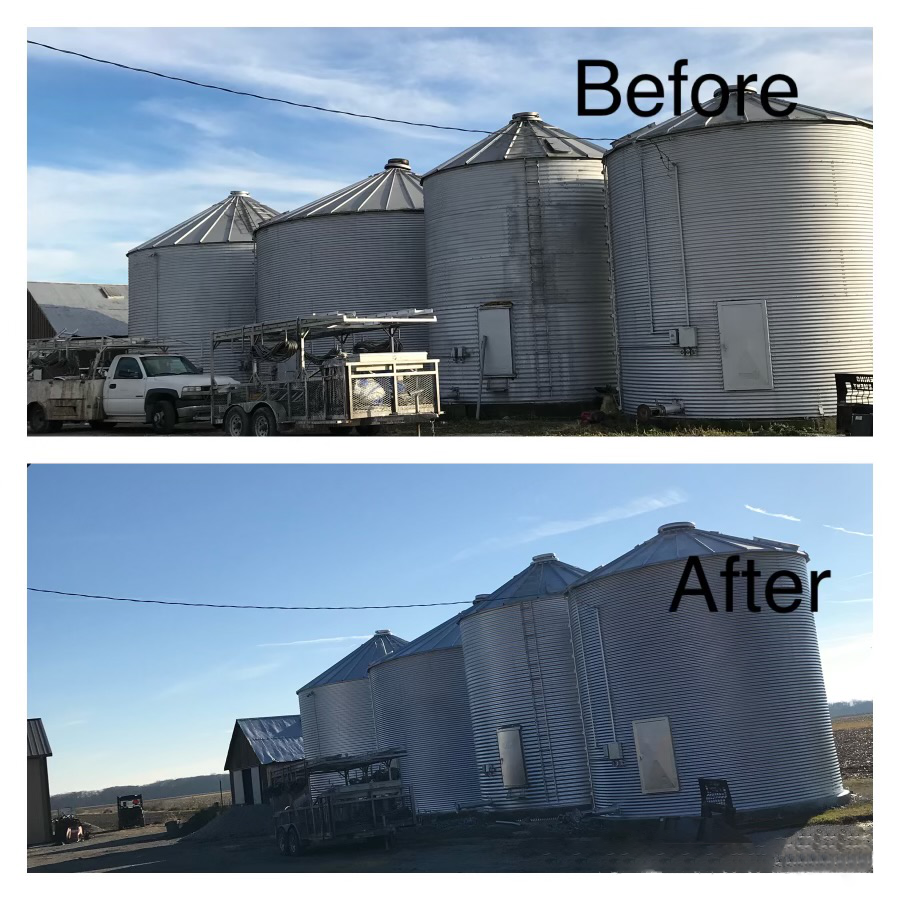
Grain bin painting in Effingham, IL is a specialized agricultural coating service focused on maintaining and protecting steel storage structures used for grain handling and long-term crop storage. These structures are constantly exposed to moisture, temperature fluctuations, and corrosive agricultural conditions that can gradually weaken protective factory coatings. Jim Nelson Painting provides grain bin painting services designed to address surface degradation, restore protective barriers, and extend the functional lifespan of these essential farm assets.
Unlike standard exterior painting, grain bin coating work requires an understanding of galvanized steel behavior, oxidation patterns, and the structural stress points that develop over years of agricultural use. Each grain bin presents unique conditions depending on its age, prior maintenance history, and exposure to weather cycles in central Illinois.
Grain Bin Surface Assessment and Material Condition
Every grain bin painting project begins with a detailed evaluation of the existing surface condition. Steel grain bins often show signs of wear that must be properly identified before any coating application can begin.
- Galvanized Steel Condition Review: Most grain bins are constructed from corrugated galvanized steel. Over time, this protective zinc layer can begin to wear down due to weather exposure and condensation cycles. Areas where galvanization has thinned or failed are carefully identified to determine coating requirements.
- Corrosion and Rust Mapping: Rust development is common on older bins, especially around seams, bolts, and lower sections where moisture tends to accumulate. These areas are marked for targeted preparation to prevent further spread beneath new coatings.
- Fastener and Joint Inspection: Grain bins rely heavily on bolted construction. Each fastener point and overlapping joint is inspected because these locations often become early entry points for moisture and oxidation.
- Structural Surface Stability Check: Before painting, the overall stability of the steel panels is reviewed. Dents, weakened sections, or prior patchwork areas are documented to ensure coating compatibility.
Surface Preparation for Grain Bin Painting
Proper preparation is critical for grain bin painting in Effingham, IL because steel surfaces must be fully cleaned and stabilized before new coatings can properly adhere. Preparation work determines how well the coating system performs over time.
- Mechanical Cleaning and Surface Abrasion: Steel surfaces are cleaned using controlled abrasion methods to remove loose oxidation, dirt buildup, and remnants of failing coatings. This creates a uniform surface profile for paint adhesion.
- Rust Removal and Treatment: Corroded areas are treated to remove active rust. In more advanced cases, rusted sections are stabilized to prevent further deterioration before primer application.
- Washing and Contaminant Removal: Grain bins often contain agricultural residue, dust, and organic material buildup. Thorough washing ensures that contaminants do not interfere with coating bonding.
- Drying and Surface Conditioning:
After cleaning, surfaces must be fully dried. Moisture trapped beneath coatings can cause premature failure, so adequate drying time is built into the preparation process.
Exterior Grain Bin Coating Application
The exterior of a grain bin is the most exposed surface and requires a coating system designed to withstand direct sunlight, precipitation, and agricultural environmental conditions common in Effingham, IL.
- Steel Panel Coating Application: Paint is applied evenly across corrugated steel panels to ensure full coverage of raised and recessed surfaces. Consistent application is important due to the textured nature of grain bin siding.
- Seams and Overlap Protection: Special attention is given to panel seams where steel sheets overlap. These areas are more susceptible to moisture intrusion and require careful sealing with coating materials.
- Bolt Head and Fastener Coating: Every exposed bolt and fastener is coated individually or through controlled spray application to prevent rust formation at connection points.
- Lower Bin Section Reinforcement:
The bottom sections of grain bins often experience higher moisture exposure due to ground-level humidity and splashback. Additional coating layers may be applied in these areas for added protection.
Interior Grain Bin Surface Considerations
While exterior grain bin painting is the most visible aspect, interior surface conditions also play a role in maintaining storage hygiene and structural integrity. Interior coating work is approached with careful consideration of food storage requirements and surface compatibility.
- Interior Wall Surface Cleaning: Interior surfaces are cleaned to remove grain dust, residue buildup, and any signs of mold or moisture staining that may develop during storage cycles.
- Coating Compatibility for Storage Safety: Interior coatings must be compatible with agricultural storage use. Surfaces are treated in a way that supports safe grain contact while maintaining structural protection of the steel substrate.
- Ventilation and Moisture Control Areas:
Interior ventilation points and upper bin sections are inspected because condensation often forms in these areas. Proper coating helps reduce moisture retention on metal surfaces.
Environmental Exposure Factors in Effingham, IL
Grain bin painting in Effingham, IL must account for the regional climate, which includes humid summers, freezing winters, and seasonal precipitation changes. These environmental conditions directly impact steel expansion, contraction, and corrosion rates.
- Temperature Cycling Impact on Steel: Repeated heating and cooling cycles cause steel panels to expand and contract. Coatings must remain flexible enough to withstand this movement without cracking or separating from the surface.
- Moisture and Condensation Exposure: Condensation forms inside and outside grain bins due to temperature differences between stored grain and outside air. This moisture is one of the primary causes of corrosion if surfaces are not properly sealed.
- Wind and Debris Contact Wear:
Agricultural environments expose grain bins to wind-driven dust, debris, and airborne particles that gradually erode protective coatings over time.
Maintenance Scheduling and Agricultural Service Timing
Grain bin painting in Effingham, IL is typically scheduled around agricultural cycles to minimize disruption to farm operations. Timing is important because bins often need to be empty and dry before coating work can be performed.
- Off-Season Planning for Application: Painting work is commonly performed when bins are not actively in use. This allows full access to interior and exterior surfaces and ensures proper coating curing conditions.
- Inspection-Based Recoating Cycles: Grain bins are periodically inspected to determine coating wear levels. Recoating schedules depend on environmental exposure and the condition of existing protective layers.
- Agricultural Property Coordination: Service planning is coordinated with farm operations to ensure that painting activities do not interfere with planting, harvesting, or storage schedules in the Effingham area.
Grain bin painting in Effingham, IL requires a structured approach focused on steel preservation, corrosion control, and environmental protection. Each stage of preparation and application contributes to maintaining the integrity of agricultural storage systems that are essential to local farming operations.