Industrial Painting
Industrial Painting in Effingham, IL
Industrial painting in Effingham, IL involves the application of protective and functional coating systems on commercial and industrial facilities where surfaces are exposed to mechanical wear, chemical exposure, and constant environmental stress. Jim Nelson Painting provides industrial coating services designed to support the long-term preservation of steel structures, production areas, storage systems, and facility components that require controlled surface protection rather than decorative finishing.
Industrial environments differ significantly from residential or light commercial settings because surfaces are often subjected to continuous operation conditions. These conditions include vibration, moisture, temperature fluctuations, and exposure to materials that can accelerate surface degradation. As a result, industrial painting requires careful surface preparation, material selection, and application methods tailored to the specific operational environment of each facility in Effingham, IL.
Industrial Surface Evaluation and Facility Assessment
Every industrial painting project begins with a structured evaluation of the facility’s surfaces and operational conditions. This assessment identifies the type of substrates involved and determines how coatings should be applied.
- Structural Material Identification: Industrial facilities may include steel framing, concrete walls, metal siding, machinery surfaces, and composite building materials. Each surface type requires different preparation techniques and coating compatibility considerations.
- Existing Coating Condition Review: Many industrial buildings already have protective coatings in place. These coatings are evaluated for signs of peeling, cracking, chalking, or chemical breakdown. Identifying coating failure helps determine whether spot repair or full recoating is required.
- Environmental Exposure Mapping: Industrial facilities often have areas exposed to higher levels of moisture, heat, or chemical contact. These zones are mapped so coating systems can be adjusted for varying exposure levels within the same structure.
- Operational Interference Consideration:
Facility activity levels are reviewed to determine how painting work can be scheduled without disrupting production or storage operations. This includes identifying safe work zones and access limitations.
Surface Preparation for Industrial Coating Systems
Surface preparation is a critical stage in industrial painting because coating performance is directly dependent on how well the surface is cleaned and stabilized before application. In Effingham, IL, industrial facilities often require extensive preparation due to long-term exposure and heavy use.
- Degreasing and Contaminant Removal: Industrial surfaces frequently accumulate oils, chemicals, dust, and residues from machinery or production processes. These contaminants must be removed to ensure proper coating adhesion.
- Mechanical Abrasion and Surface Profiling: Steel and metal surfaces are prepared using abrasion techniques to create a suitable profile for coating bonding. This step is essential for preventing premature coating failure in high-stress environments.
- Repair of Surface Damage and Wear Areas: Cracks in concrete, corrosion on steel, and damaged protective layers are repaired prior to painting. These repairs ensure that coatings are applied to stable and structurally sound surfaces.
- Dust and Residue Control:
After preparation, surfaces are cleared of dust and particulate matter. Even small amounts of residue can interfere with coating adhesion and long-term durability.
Industrial Coating Application for Structural Surfaces
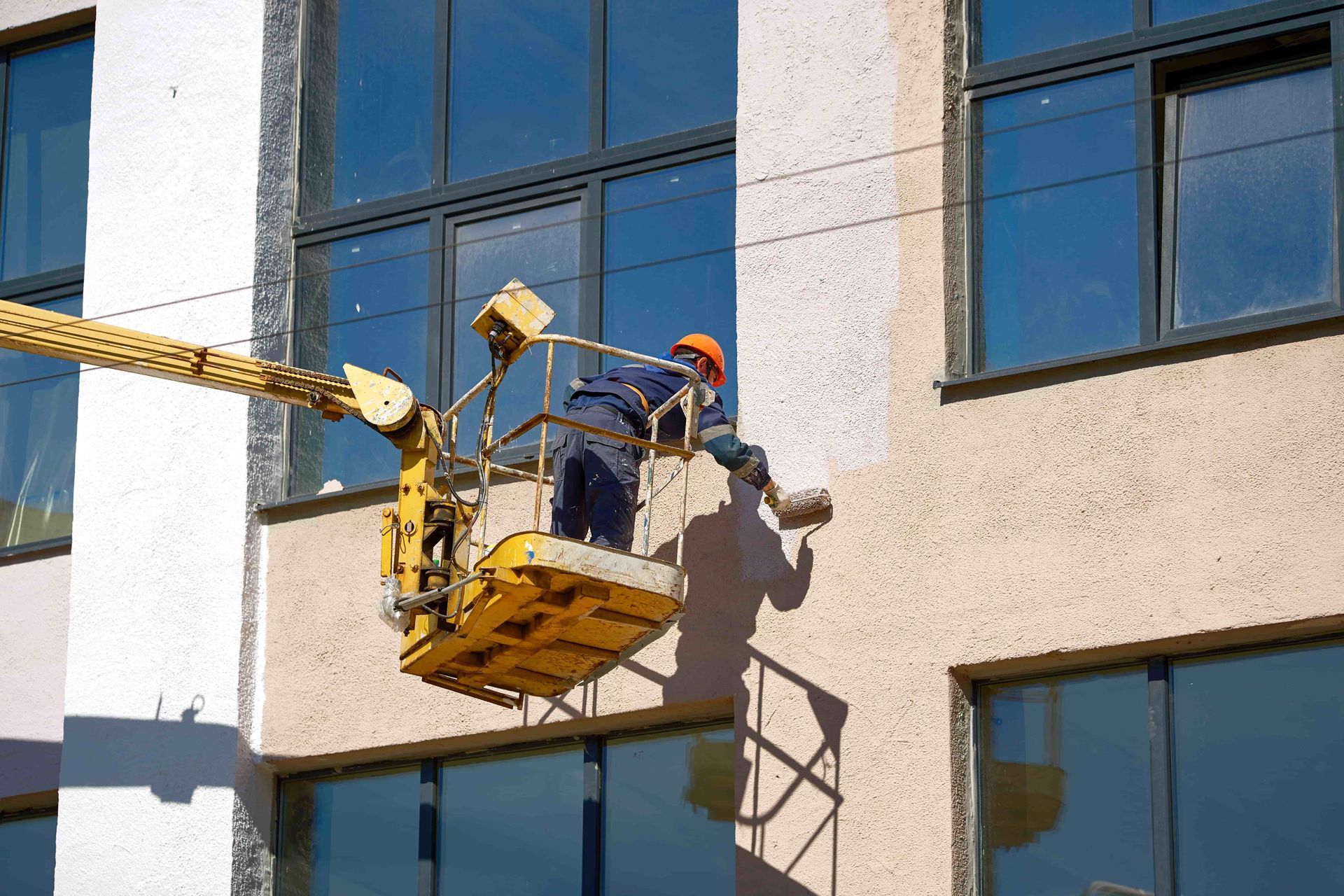
Industrial painting application methods are selected based on surface type, environmental exposure, and operational requirements within the facility. The goal is to create a consistent protective barrier that supports long-term performance.
- Steel Structure Coating Application: Steel beams, columns, and framing systems are coated to prevent corrosion and structural weakening. Application is performed to ensure full coverage across joints, welds, and connection points.
- Concrete Surface Sealing and Painting: Concrete walls and floors are treated with coatings designed to reduce moisture absorption and resist surface wear. These coatings also help minimize dusting and surface breakdown.
- Equipment and Machinery Surface Coating: Industrial equipment surfaces are coated where appropriate to reduce corrosion and extend operational lifespan. Special attention is given to high-contact areas and exposed metal components.
- Controlled Layer Application Techniques:
Coatings are applied in controlled layers to ensure uniform thickness and proper curing. This process is essential for maintaining consistent protection across large industrial surfaces.
Facility-Specific Environmental Protection Requirements
Industrial painting in Effingham, IL must account for a wide range of environmental factors depending on facility type and function. These conditions influence coating selection and long-term performance expectations.
- Chemical Exposure Resistance: Some industrial environments involve exposure to chemicals, solvents, or manufacturing byproducts. Coatings must be selected to resist breakdown caused by chemical contact.
- Moisture and Humidity Control: Humidity and water exposure can lead to corrosion and material degradation. Protective coatings help reduce moisture penetration on both interior and exterior surfaces.
- Temperature Variation Durability: Industrial facilities often experience temperature fluctuations due to equipment operation and seasonal changes. Coatings must maintain stability under expansion and contraction cycles.
- Abrasion and Impact Resistance: High-traffic industrial areas require coatings that can withstand impact, scraping, and constant physical contact without breaking down or peeling.
Maintenance Planning and Industrial Service Scheduling
Industrial painting projects in Effingham, IL are typically scheduled with operational continuity in mind. Many facilities require coordinated planning to minimize disruption while ensuring surfaces remain protected.
- Phased Painting and Sectional Work Planning: Large facilities are often divided into sections so painting can be completed without halting entire operations. This allows production or storage activities to continue in unaffected areas.
- Inspection and Coating Lifecycle Tracking: Regular inspections help determine when industrial surfaces require recoating. Monitoring coating performance ensures that protective systems remain effective over time.
- Shutdown and Low-Activity Scheduling: Where possible, painting work is scheduled during planned shutdowns or low-production periods to allow full access to critical surfaces.
Industrial painting in Effingham, IL requires a technical and structured approach focused on surface preparation, environmental resistance, and long-term coating performance. Each facility presents unique operational conditions that influence how coatings are selected and applied, ensuring that industrial structures and equipment remain protected under demanding use conditions.